Sustainability
The Linear Economy Isn't Working
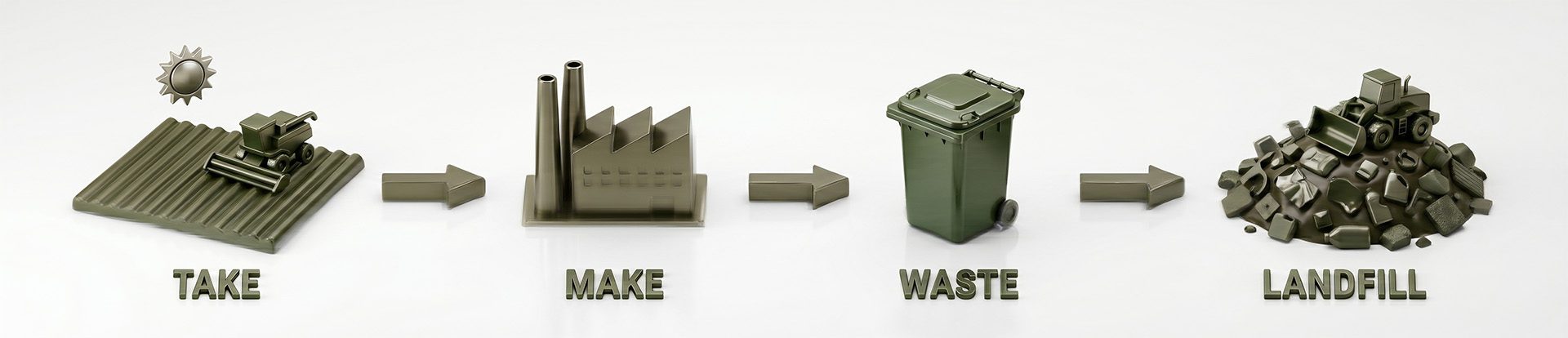
Reimagining Waste
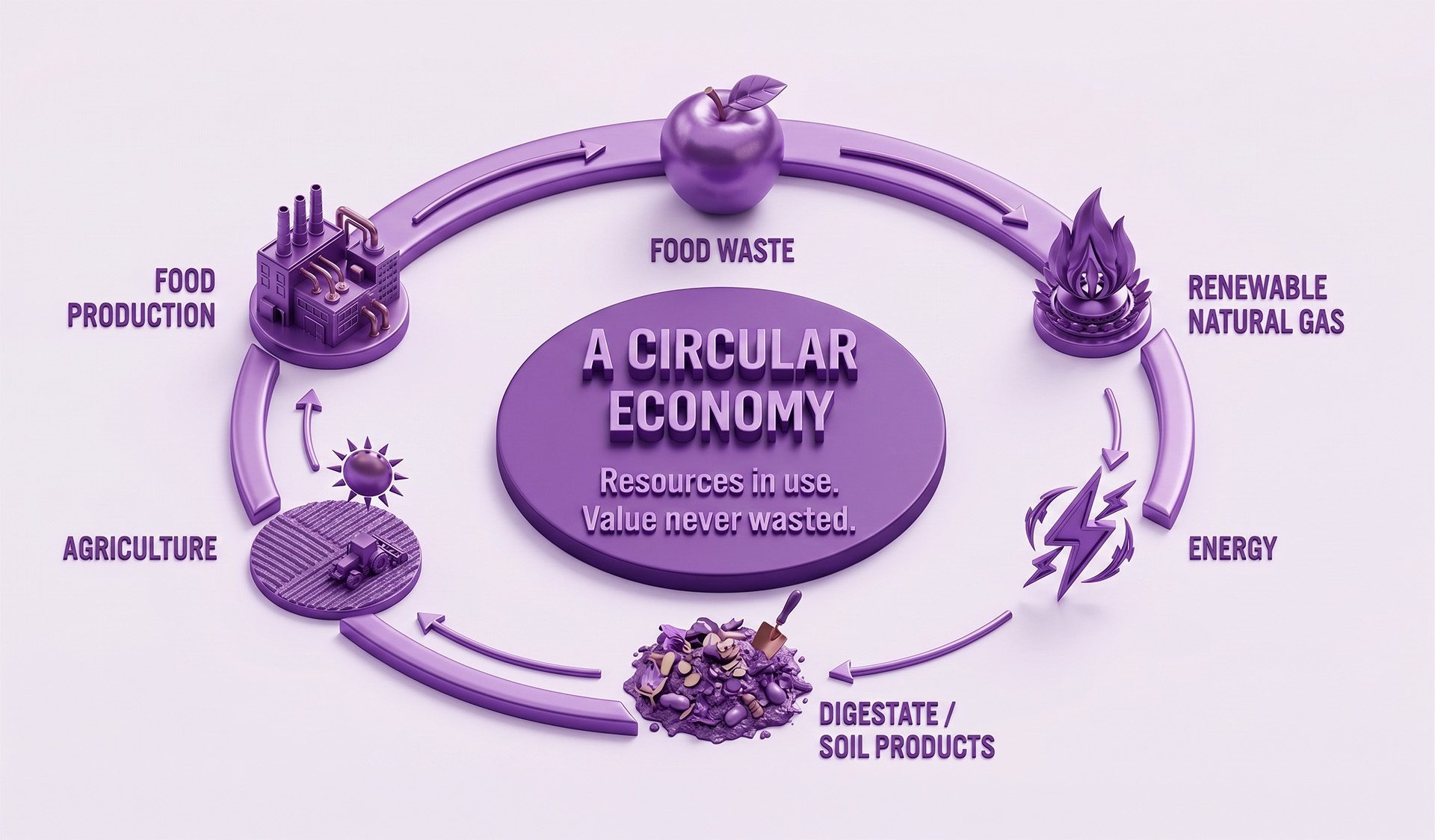
A circular economy keeps materials in use, extracts maximum value from resources, and regenerates natural systems.
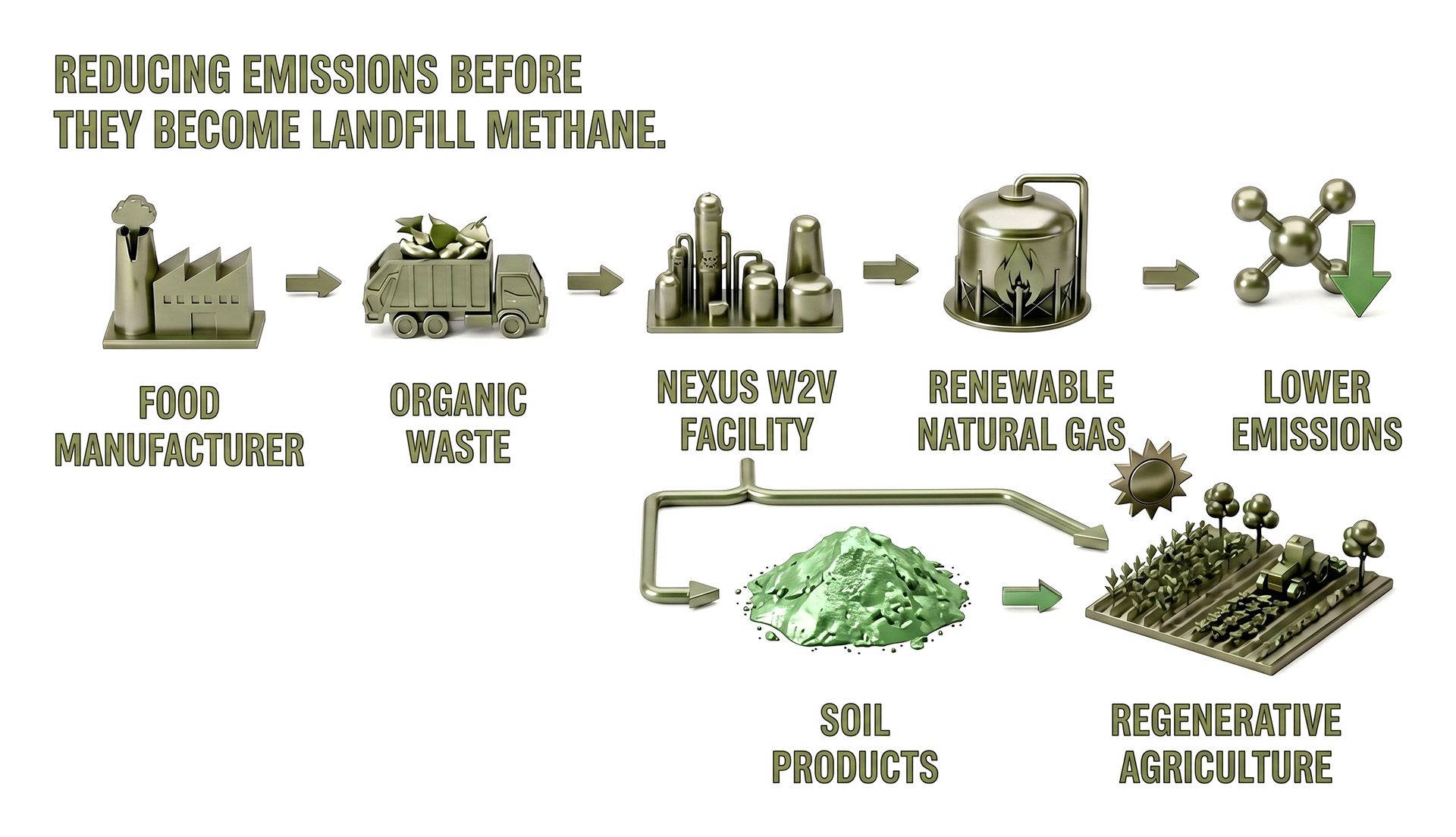
Our facilities are designed around this principle. Organic waste streams are transformed into renewable natural gas, soil products, and other beneficial outputs that create value across multiple sectors.
Rather than burying resources in landfills, we return them to productive use.
How We Create Positive Impact
Climate Action
Reducing Emissions
By diverting organic waste from landfills and converting it into renewable energy, we reduce methane emissions and support a lower carbon footprint.
Resource Recovery
Nothing Valuable Should Go to Waste
Organic materials contain energy, nutrients, and economic value. We recover these resources and put them back to work through renewable fuels, compost products, and soil amendments.
Community Prosperity
Supporting Local Economies
Infrastructure investments create jobs, attract new economic activity, strengthen local supply chains, and provide communities with modern waste management solutions.

Regenrative Agriculture
Healthier Soils, Stronger Food Systems
Recovered organic materials can help improve soil health, reduce waste, and support more resilient agriculture systems that benefit both producers and communities.

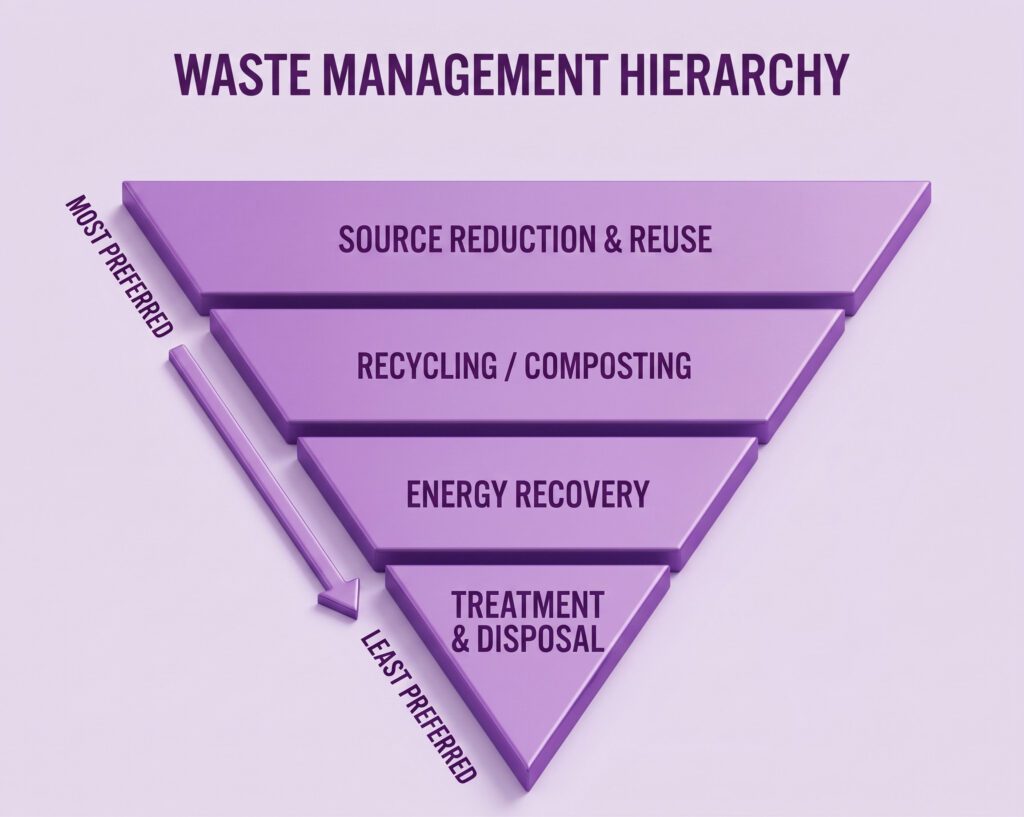
Non-Hazardous Materials and Waste Management Hierarchy
EPA developed the non-hazardous materials and waste management hierarchy in recognition that no single waste management approach is suitable for managing all materials and waste streams in all circumstances.
The hierarchy ranks the various management strategies from most to least environmentally preferred. The hierarchy places emphasis on reducing, reusing, recycling and composting as key to sustainable materials management.
Source: EPA
Reducing Emissions Across the Value Chain
Climate action requires more than reducing emissions within facility boundaries. It requires addressing emissions throughout the entire value chain.
Nexus W2V projects help organizations reduce greenhouse gas emissions by diverting organic materials from landfills, recovering renewable energy, and creating productive uses for resources that would otehrwise become waste.
SCOPE 1
Direct Emissions

Emissions generated directly by a company’s owned or controlled operations.
While many organizations focus first on reducing operational emissions, significant opportunities often exist beyond facility boundaries.
SCOPE 2
Purchased Energy

Emissions resulting from purchased electricity, heating, cooling, or steam.
Renewable energy generated through circular infrastructure can support broader efforts to transition toward lower-carbon energy systems.
SCOPE 3
Value Chain Emissions

For many organizations, Scope 3 emissions represent the largest share of their carbon footprint.
Organic waste disposal is often an overlooked contributor to Scope 3 emissions. By diverting these materials from landfills, organizations reduce methane emissions and create valuable resources.
Waste isn't just a disposal challenge. It's a climate opportunity.
Every ton of organic material diverted from landfill represents an opportunity to reduce methane emissions, recover renewable energy, and support a circular economy.
Contributing to a Better Future
The challenges of waste, energy, climate, and economic development are deeply interconnected. Our projects contribute to global sustainability priorities by organizing resource efficiency, renewable energy generation, infrastructure development, and climate resilience.
We Support the Following UN Sustainable Development Goals


12

Supporting Indiana's Future
Indiana is emerging as a leader in advanced energy, infrastructure investment, and automotive waste management solutions. Through projects like the Kingsbury Bioenergy Facility, Nexus W2V is helping create a more resilient resource management system while generating renewable energy, reducing landfill dependence, and supporting local economic growth.
200 Tons/Day
Renewables
Jobs Creation
Soil Products
Landfill Diversion
Regional Energy Resilience
Food Waste is a Lost Opportunity
Food waste represents one of the greatest inefficiencies in the modern economy. When organic materials are discarded, communities lose the embedded value of the energy, water, labor, and land required to produce them.
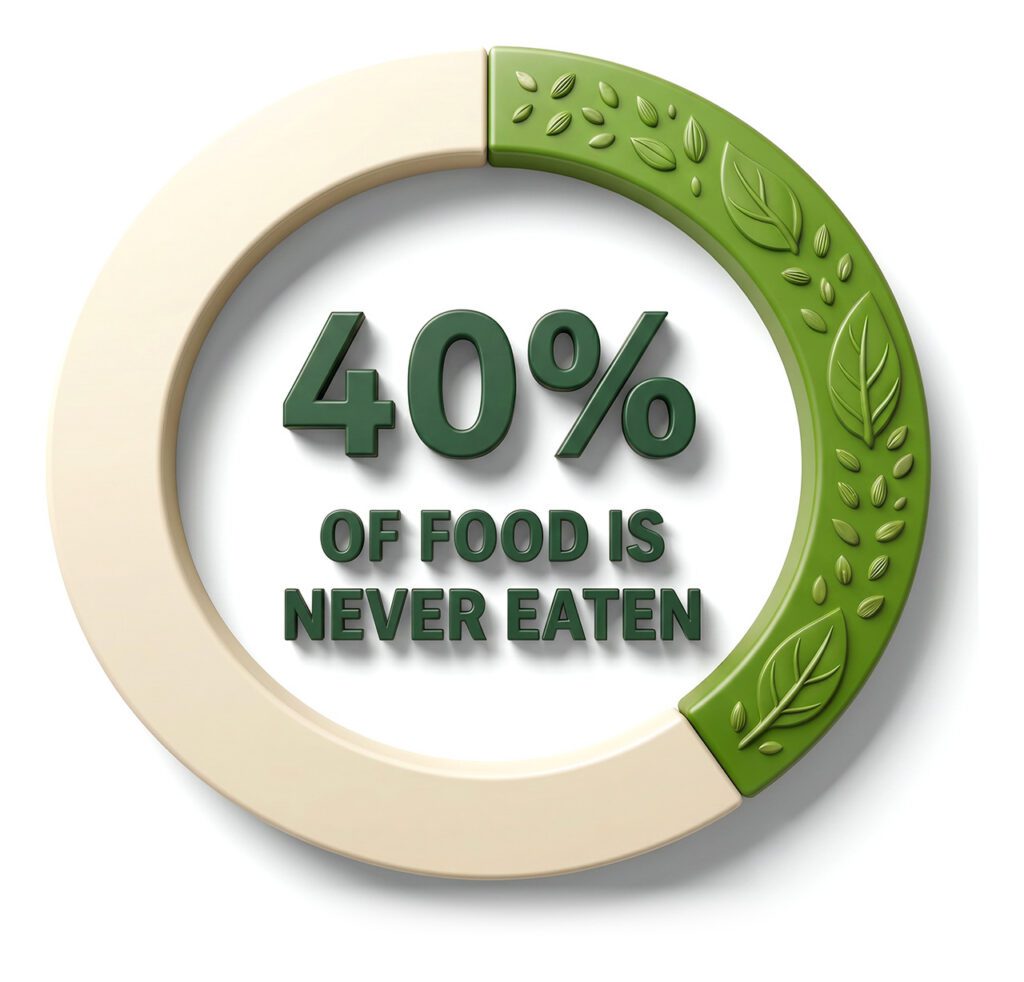
Instead of becoming waste, it can become:

Waste-to-value infrastructure helps recover that value while reducing environmental impacts and creating new pathways for resource utilization.
A Future Where Waste Doesn't Exist
Where food scraps become renewable energy.
Where organic materials restore soil health.
Where local infrastructure creates lasting economic opportunity.
Where circular systems replace linear waste streams.
Where sustainability is measured not only by what we conserve, but by what we regenerate.
