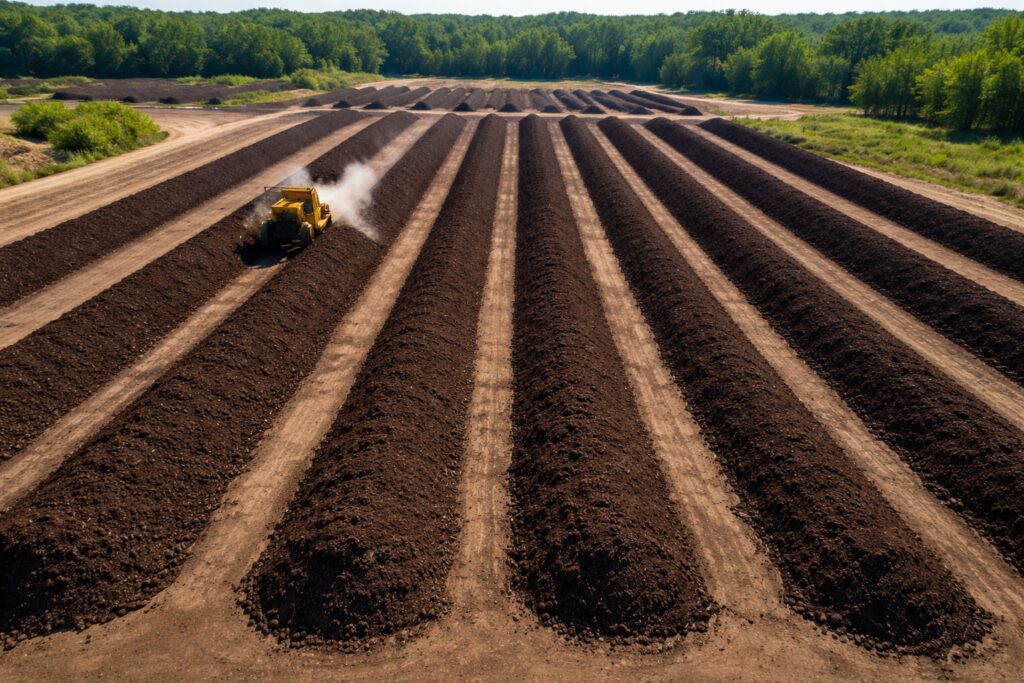
Windrows are a foundational component of modern organic waste management, widely used to process large volumes of biodegradable material efficiently. In this method, organic waste—such as food scraps, yard debris, biosolids, and agricultural byproducts—is arranged in long rows and managed under controlled, aerobic conditions to accelerate decomposition.
By regularly turning the rows, operators introduce oxygen, regulate temperature, and balance moisture levels, creating optimal conditions for microorganisms to break down complex organic matter. This process not only speeds up decomposition but also helps control odors and ensures consistent material processing across the pile.
Windrow composting is especially valued for its scalability and cost-effectiveness. It is commonly deployed by municipalities, agricultural operations, and industrial facilities to divert organic waste from landfills while producing a stable, nutrient-rich compost product. The method can handle significant waste volumes with relatively low infrastructure requirements, making it one of the most accessible and widely adopted composting solutions globally.
As communities and organizations seek sustainable waste management strategies, windrows offer a proven approach to transforming organic waste streams into beneficial resources—supporting landfill diversion, reducing emissions, and contributing to a circular economy.
To read the full article, visit: What are Windrows?